
Dog and Cat Dental Problems
If you are at all concerned about your pets teeth do not hesitate to contact us on 01254 53622.
Normal dog's teeth. Healthy pink gums, clean teeth and no scale.
Now is the time to keep the teeth in good order by feeding a good quality dry food. Encourage chewing with products such as hide chews, Kongs, Nylabone, Dentastix and large uncooked bones (although if your dog is not used to bones they may break their teeth). Clean your dog's teeth regularly using a tooth brush and doggy tooth paste. Regular health checks with one of our vets or veterinary nurses (this is usually done at the time of the annual vaccination.
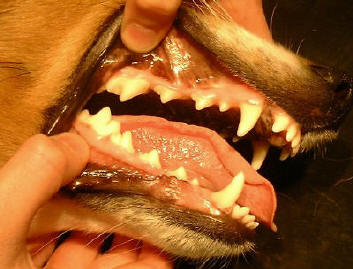 Early Tartar - just a hint of tartar at gum level. This is the stage that the teeth should be carefully monitored. Increase your effort in cleaning the teeth (see the steps outlined above). Early scale can sometimes be scraped off using a finger nail.
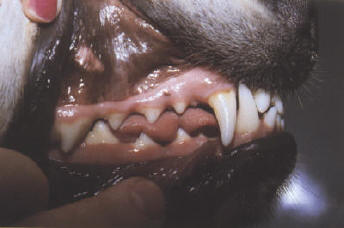 Scale and gingivitis - the gums are red and swollen, causing a sore mouth and some smell (animals at this stage usually don't show any outward signs of pain). This cat needs to come to the surgery for dental treatment. Some teeth may need to be removed.
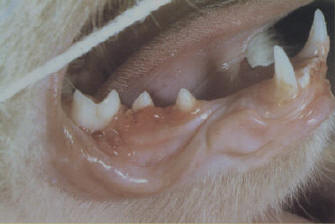 Lots of scale, causing gum health deterioration, an unpleasant smell and perhaps some pain. Some teeth becoming loose, as pockets form between gum and root (not visible). This dog's health will be affected by infection spreading from the gums to the throat, and via the bloodstream to the chest, liver and kidneys. The mouth needs extensive descaling, extractions, dental restoration where possible and antibiotics until the gums have recovered.
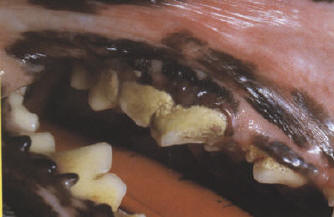 Dental Caries - tooth structure rots away, this is commonly seen in cats but is rare in dogs.
The first sign is a bad smell on the breath but pain might not be noticed until the bone is infected. These teeth need to be extracted urgently.
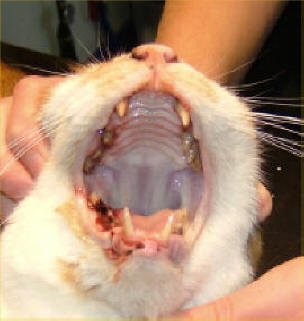
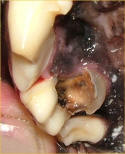
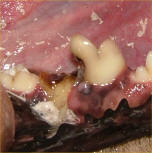
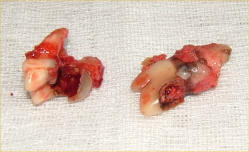
Severe scale. The gums are often very inflamed and easily bleed. There may be pus seeping from the gums and an awful smell. Deep pockets may have formed, roots are exposed, teeth are becoming loose and falling out.
These pets will not be feeling well. Multiple tooth extractions are usually required.
Prolonged antibiotic treatment may be needed for the infected bone around the diseased teeth. Often after dental treatment these animals will have a new lease of life, because they feel much better. Fortunately dogs and cats can eat well even with no teeth!
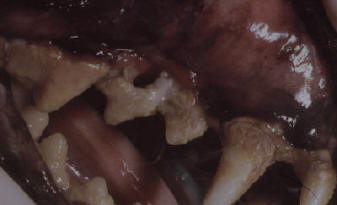
Root abscess of the left lower canine (baby tooth).
Dogs should be examined at 6 - 8months of age to check that all the baby teeth have gone (we usually do this as a matter of routine when they are neutered). Any remaining baby teeth should be removed before they cause trouble. Cats rarely have a problem with retained baby teeth.
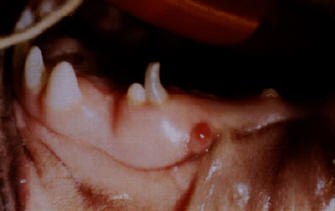
Gum granulomas (Epulis). These can be a complication of tooth problems in some breeds, such as boxers and bull mastiffs. The photos below are before, and after treatment.
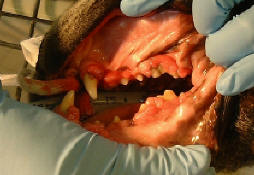
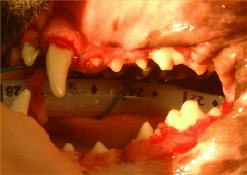
12 Monthly Dental Check-Up
To keep you pet's gums and teeth healthy early treatment is essential. Bring your pet for a check-up with the vet or nurse every 12 months (there is a small charge). Some dogs and cats need a de-scale and polish annually from the age of 3 years old, to keep the teeth in good order.
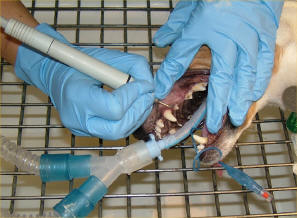 Routine de-scaling under general anaesthetic.
Daisy Street Vets Blackburn April 2015.
